The Supreme Court just made skinny-label patent claims harder to plead
Skinny-label patent claims just became harder to pursue. Here’s what the Supreme Court’s decision means for regulated businesses.


Skinny-label patent claims just became harder to pursue. Here’s what the Supreme Court’s decision means for regulated businesses.

The United States Copyright Office published comprehensive guidelines addressing the registration process for works containing material generated by Artificial Intelligence (AI). The growing use of AI in various creative fields has necessitated a clear legal framework to protect intellectual property rights.

On December 13th, 2023, the United States Patent and Trademark Office (USPTO) officially announced the selection of Atlanta as the site for its new Southeast Regional Office.
The team at Founders Legal is honored to recognize the vital role our community played in this remarkable achievement. Our campaign to champion Atlanta’s bid for the USPTO Southeast Regional Office was a collective endeavor, deeply rooted in the community’s active participation and unwavering support.
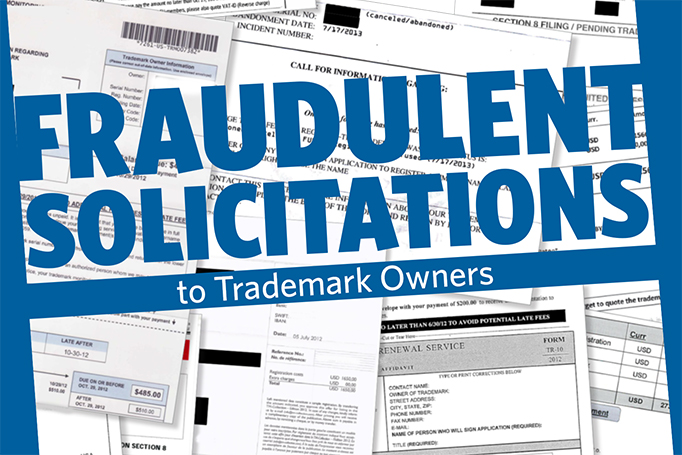
Several clients have reported convincing scam calls from individuals claiming to be representatives of the USPTO. These scammers are employing a technique known as “spoofing” to make their calls appear legitimate. They manipulate caller ID systems to display false information, misleading recipients into believing they are in communication with the USPTO.
The notice provides ample guidance for all parties under the duty to disclose, including whom the duty of disclosure applies to and the equivalence of the duty of disclosure to the Patent Office to all other branches of government and commercial actions.

Chinese Utility models can provide an alternative to invention patents and supplement them too.

Funding agencies have taken a very narrow approach when interpreting the four categories listed above from 35 U.S.C. § 203. Accordingly, contractors should understand how march-in rights function in theory, but it is historically unlikely to assume an agency would exercise this power without further legislation. Ultimately, contractors should focus on furthering their research and ensuring proper disclosure practices to their funding agencies, as it is historically unlikely that a funding agency will exercise their march-in rights and compel contractors to license any of their subject inventions.

Under typical Phase 1 contracts with the Department of Defense (DoD), such as the Air Force Research Lab (AFRL), default ownership of domestic and international intellectual property rights belong to the Contractor. However, if the Contractor fails to report any inventions to the contracting officer within two months of preparing the corresponding patent applications, the Contractor risks losing ownership of those inventions.
The United States Patent Office has announced an expansion of the Collaborative Search Pilot Program beginning November 1, 2022. This announcement signals the beginning of phase three of the pilot program, which will last until 2024.
It has become increasingly significant for companies to keep abreast of data compliance trends to comply with data compliance-related policies and regulations in China. With the start of 2023, reviewing the regulations related to data transfer released in China over the last year is essential. These regulations may impact multinational companies investing in China and companies involved in cross-border business.
End of content
End of content