Founders Legal Expands Enterprise AI Patent Strategy for Software Innovators
Founders Legal has expanded its enterprise AI and software patent strategy practice to address evolving patent eligibility standards

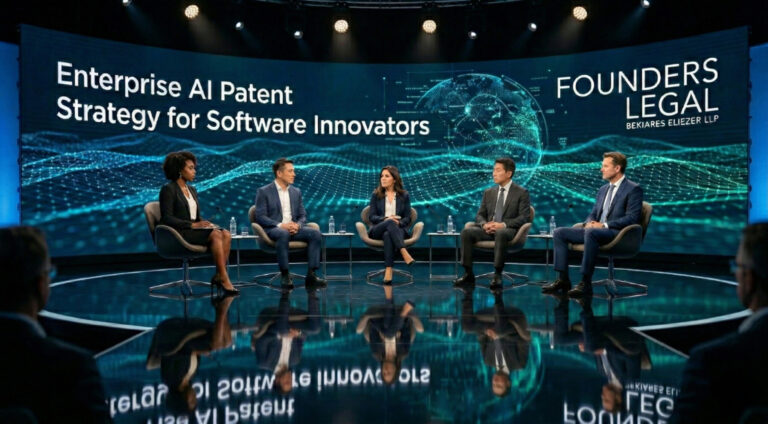
Founders Legal has expanded its enterprise AI and software patent strategy practice to address evolving patent eligibility standards

Patent Rights: Assignors Transferring Rights and Infringing on Assigned Patents In June 2021’s Minerva Surgical Inc. v Hologic case, the US Supreme Court (“SCOTUS”) ruled that assignor estoppel is limited and may allow a previous assignor, under specific circumstances, to challenge the validity of patents they have subsequently reassigned. This article will explore the SCOTUS…

China Embraces Two WIPO Treaties, Expanding its Presence in the Global IP Ecosystem China has joined two treaties recently: the World Intellectual Property Organization’s (“WIPO”) Hague System and Marrakesh Treaty, which is a significant step forward for the worldwide intellectual property ecosystem. The Hague System WIPO’s Hague System is an international treaty that allows for…

Freedom to Operate Search (FTO) What is a freedom to operate search and opinion? A freedom to operate (FTO) study is usually performed on a finalized product design before its release in order to determine if the product, or any of its components, would infringe on any enforceable patents. Even if the product being studied…

Once a public disclosure is made, the public disclosure bars the filing of a patent application in almost all jurisdictions. However, in the United States, there is a 12 month grace period starting from the public disclosure to file a patent application. A patent filing in the US does not count as prior art if we make a US filing before a public disclosure. Therefore, we have two routes to file applications in other countries.

The notice provides ample guidance for all parties under the duty to disclose, including whom the duty of disclosure applies to and the equivalence of the duty of disclosure to the Patent Office to all other branches of government and commercial actions.
Chinese Utility models can provide an alternative to invention patents and supplement them too.

Funding agencies have taken a very narrow approach when interpreting the four categories listed above from 35 U.S.C. § 203. Accordingly, contractors should understand how march-in rights function in theory, but it is historically unlikely to assume an agency would exercise this power without further legislation. Ultimately, contractors should focus on furthering their research and ensuring proper disclosure practices to their funding agencies, as it is historically unlikely that a funding agency will exercise their march-in rights and compel contractors to license any of their subject inventions.
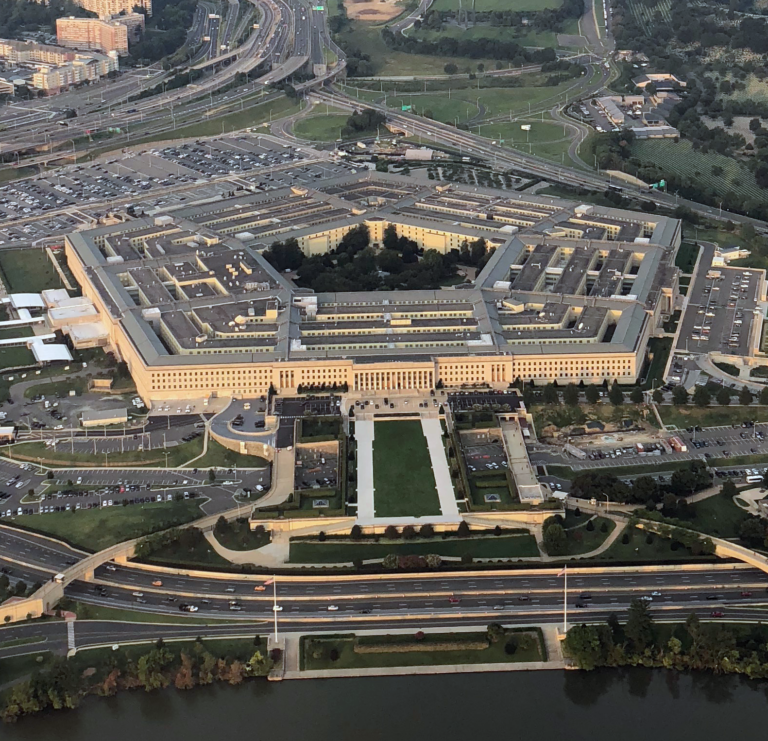
Under typical Phase 1 contracts with the Department of Defense (DoD), such as the Air Force Research Lab (AFRL), default ownership of domestic and international intellectual property rights belong to the Contractor. However, if the Contractor fails to report any inventions to the contracting officer within two months of preparing the corresponding patent applications, the Contractor risks losing ownership of those inventions.
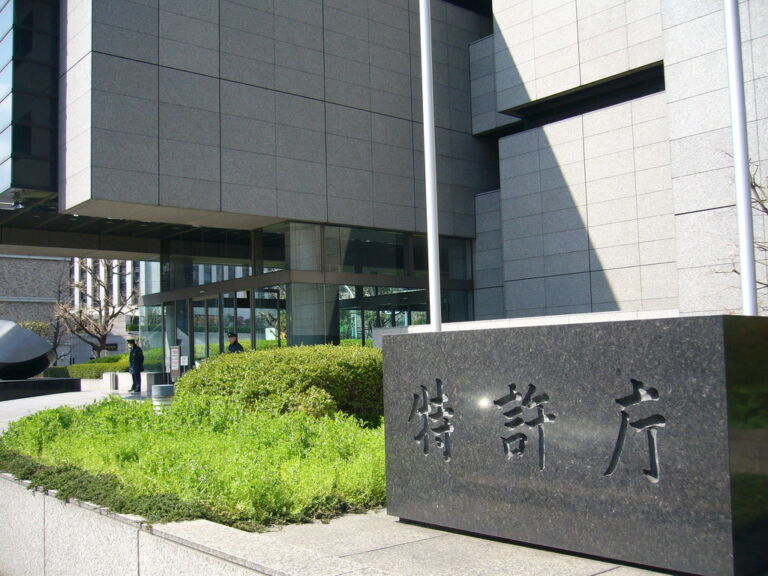
The United States Patent Office has announced an expansion of the Collaborative Search Pilot Program beginning November 1, 2022. This announcement signals the beginning of phase three of the pilot program, which will last until 2024.
End of content
End of content