Immersive Entertainment
Legal Infrastructure for a Multi-Billion Dollar Experience Economy

The Rise of Immersive Entertainment as a Global Economic Force
Immersive entertainment is no longer niche. It is a thriving intersection of technology, media, real estate, intellectual property, and human experience. Defined by XR (extended reality), VR (virtual reality), MR (mixed reality), spatial computing, and hybrid digital-physical installations, the sector is reshaping how we consume culture, engage with brands, and monetize creativity.
Global market indicators reflect a meteoric rise: XR is forecast to exceed $345 billion in global value by 2030, while the metaverse gaming economy alone could reach $1.3 trillion by 2033. In Asia, the location-based entertainment (LBE) sector is projected to double in market size by 2028, from $1.44 billion to $2.92 billion. This surge has triggered demand for legal clarity and strategic counsel that few traditional firms are equipped to provide.
Yet, while the technology accelerates, legal doctrine lags behind. Immersive creators, ranging from theme park developers and digital artists to AR startup founders and media conglomerates, are grappling with ambiguous standards around IP, safety, privacy, and monetization.
When Copyright Meets Code: Intellectual Property in Virtual Worlds
Immersive experiences are often co-authored, multi-licensed, and real-time updated environments. A single location-based XR experience may involve dozens of rightsholders: IP owners, software developers, hardware manufacturers, motion capture performers, and third-party licensors. Without robust legal frameworks, the creative chain becomes a liability.
Key complexities include:
- Ownership of AI-generated assets within XR environments
- Co-authorship of virtual architecture or 3D environments
- Use of real-world brands in interactive simulations (which may constitute endorsement
- Virtual replicas of copyrighted music, artwork, and public spaces
The ZeniMax v. Oculus case is a notable precedent. ZeniMax successfully sued Oculus for misappropriating trade secrets related to VR technology, resulting in a $500M verdict (later reduced). The case underscores the stakes of securing IP rights early and contractually defining ownership pathways in tech-centric entertainment production.
The Legal Anatomy of Immersive Experience Contracts
Traditional entertainment law contracts, such as option agreements, location releases, and talent agreements, are often inadequate for immersive formats. Instead, these agreements must be dynamic, accounting for real-time rendering, interactive participation, and integration with physical venues.
A well-structured immersive entertainment agreement typically includes multi-format IP licensing provisions and carefully delineated revenue-sharing mechanisms that span platform hosts, venue operators, and content creators. It also incorporates data governance frameworks for biometric and behavioral data and outlines safety protocols applicable both digitally and on-premises. Insurance terms covering physical injuries and digital incidents, as well as accessibility language meeting ADA and international equivalents, are increasingly standard in these documents.
Failure to integrate these elements into early-stage agreements has led to disputes, especially in joint ventures where venue hosts and digital creators have misaligned expectations.
Privacy and Biometric Data: The Next Legal Battleground
Immersive systems capture deeply personal information, including eye tracking, emotional responses, vocal patterns, and user behavior data. This reality places immersive operators under the jurisdiction of strict regulatory frameworks such as the European Union’s GDPR and California’s CCPA.
To comply, companies must implement informed opt-in consent processes and ensure transparent communication about data use and storage. They must also articulate clear data retention and deletion policies, establish breach notification protocols, and comply with child privacy laws like COPPA. In 2023, one XR theme park operator faced regulatory backlash after failing to obtain proper consent for facial recognition use. This incident highlights the importance of precise legal architecture in data-rich environments.
Physical Liability in Immersive Experiences: From Motion Sickness to Malfunction
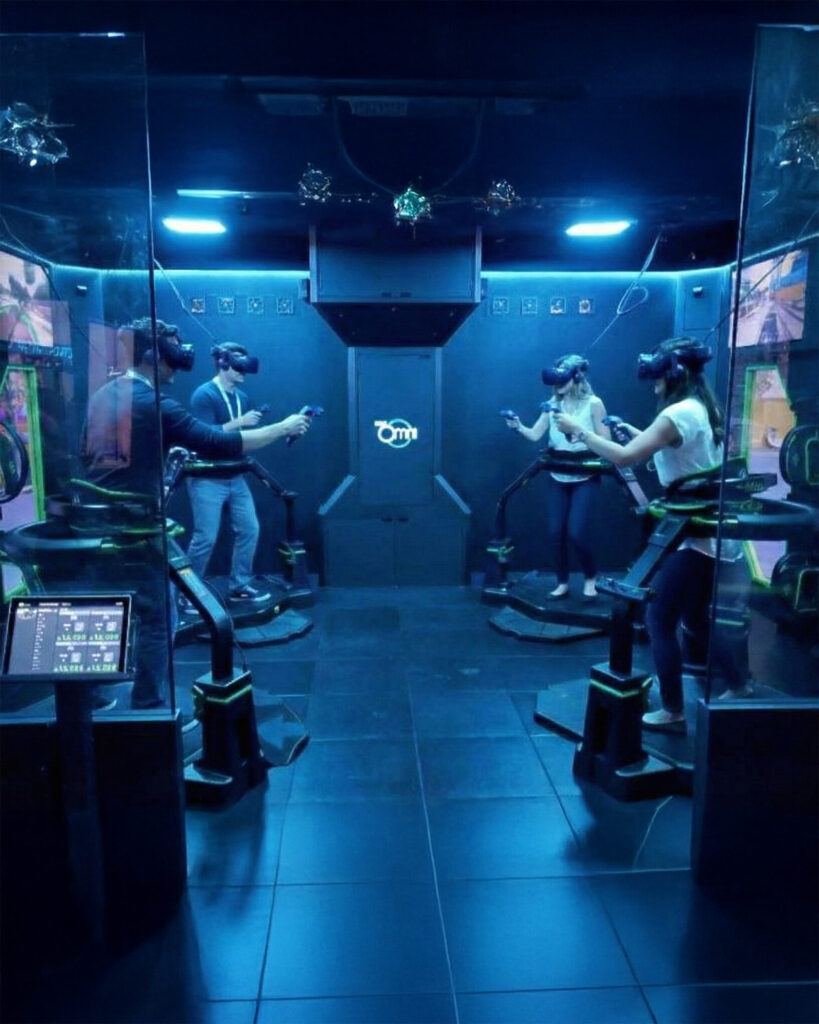
Unlike screen-based entertainment, immersive experiences are physically embodied. Users walk, reach, jump, and move, sometimes in near darkness or altered reality. This introduces new categories of risk:
- Slips, falls, or collisions while under sensory disorientation
- Hardware malfunctions causing burns or injuries
- Emotional distress or psychological harm from intense content
Waivers and safety protocols are essential, but must be jurisdiction-specific and anticipate emerging claims. In the case of immersive theatre or horror-based VR, informed consent is not only ethical; it is legally protective. One case in California saw a participant sue for emotional distress after a hyper-realistic haunted experience blurred boundaries between fiction and reality.
Real Estate Meets Virtual Design: Legal Complexities of Location-Based Activations
The transformation of real-world venues into immersive environments brings new legal considerations. Developers, architects, licensors, and content creators must negotiate build-out rights and event-specific zoning while addressing compliance with fire, health, and ADA standards. Revenue allocation models and ticketing frameworks must also be structured to account for venue partnerships and content exclusivity.
Simultaneously, liability insurance needs to span both digital and physical risks. These include hardware failures, safety hazards, and data breaches. Lease structures often integrate elements from live performance law. However, they must adapt to immersive-specific considerations such as platform licensing, real-time updates, and interactive use.
Regulatory Crosswinds: Compliance in a Multi-Jurisdictional Industry
Immersive entertainment knows no borders, but legal compliance does. Producers must reconcile a fragmented regulatory landscape across the United States, the European Union, and Asia. Divergent legal doctrines govern areas such as intellectual property rights, biometric protections, accessibility standards, and consumer finance.
A single metaverse activation can trigger compliance requirements under the GDPR, COPPA, the UK’s Age Appropriate Design Code, and China’s cybersecurity law. Legal teams must proactively integrate jurisdiction-specific obligations into platform architecture, user terms, and enforcement protocols rather than retrofitting compliance after launch.
Immersive Law in Action: Case Studies and Industry Precedents
The evolving legal ecosystem is already producing real-world disputes. In the Oculus v. ZeniMax litigation, a misappropriation of VR trade secrets led to a multimillion-dollar verdict. XR theme parks have faced class-action lawsuits following physical injuries caused by faulty hardware calibration. A California immersive theatre production was sued for psychological distress stemming from intense narrative experiences. This case highlighted the importance of informed consent protocols. In Illinois, an XR installation was fined under the state’s Biometric Information Privacy Act for collecting facial scans without explicit opt-in consent.
These cases illustrate the necessity of legal specialization that anticipates immersive-specific vulnerabilities, from hardware performance and safety disclosures to psychological impacts and data governance.
The Future of Immersive Law: A Call for Integrated Legal Design
As immersive technology becomes a standard rather than an exception, the legal frameworks supporting it must evolve accordingly. The industry is moving toward embedded compliance models, with real-time legal safeguards integrated directly into platforms, installations, and user experiences.
We anticipate the rise of smart contracts that automatically track IP usage across virtual installations, modular licensing systems for multi-format deployment, and plug-in compliance libraries for biometric standards across jurisdictions. Legal counsel will not only interpret laws but help design systems capable of upholding them dynamically.
Firms capable of merging entertainment, real estate, technology, and regulatory insight into a unified legal offering will shape the next decade of immersive business infrastructure.
FAQ
Authoritative Resources
- ADA.gov – U.S. Accessibility Guidelines
- European Commission – Data Protection
- CCPA Compliance Resources

Beth is highly skilled in managing intellectual property portfolios—copyrights, trademarks, patents, and licensing—for clients ranging from emerging artists and producers to a top-100 accounting firm and a billion-dollar software company. From 2018 to 2023, she served as the elected representative for Georgia’s House District 95, championing the creative arts and earning the 2019 “Friend of Film Award.”
Beyond her practice, Beth remains deeply committed to community engagement—mentoring through Arté GA, serving on the Decide DeKalb Entertainment Advisory Board, and participating in Women in Film and Television Atlanta and the Georgia Production Partnership. A passionate musician and outdoors enthusiast, she plays piano, gardens, hikes North Georgia’s trails, and SCUBA dives worldwide.