How 2026 Will Reshape Entertainment & Media Law
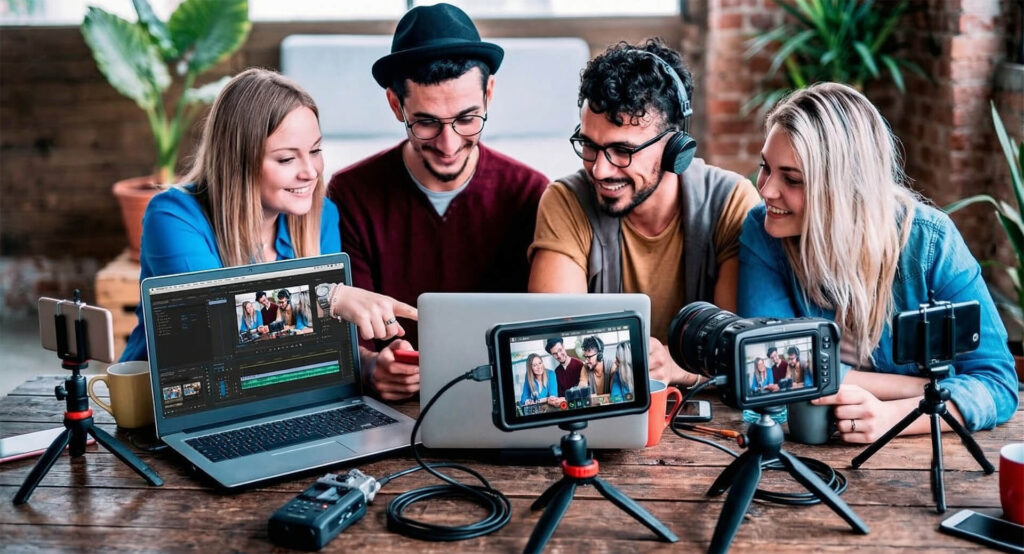
Entertainment and media legal strategy now begins at the moment content is created
Entertainment and media law is entering a structural transition. Legal decision making once focused on contracts, clearance reviews, and disputes that emerged after production was complete. That model assumed that the creative process was largely separate from the legal frameworks governing ownership and distribution.
That separation is disappearing. Artificial intelligence tools are now embedded directly inside writing rooms, editing workflows, music production, and marketing pipelines. Synthetic performers and digital replicas can appear in advertising or storytelling without traditional casting. Platform driven distribution models increasingly merge entertainment programming with advertising and data driven marketing strategies.
For creators, production companies, and brands this means legal risk now sits much earlier in the creative lifecycle. Decisions made during development or early production can determine whether content is protectable, whether it can be licensed internationally, or whether it triggers regulatory obligations once distributed.
These pressures explain why 2026 Will Reshape Entertainment & Media Law in ways that are operational rather than theoretical. The legal questions that matter most are no longer limited to litigation or contract interpretation. They increasingly shape how creative teams structure production workflows, how companies negotiate licensing rights, and how platforms monetize content across global audiences.
The sections that follow examine the specific legal shifts most likely to affect creators, studios, platforms, and brands in 2026. Each development reflects a broader trend in which legal governance becomes embedded directly in production planning, content monetization, and distribution strategy.
Human authorship has become a production requirement rather than a copyright technicality
Artificial intelligence is rapidly becoming part of the creative toolkit. Writers rely on generative systems for brainstorming and drafting. Editors use AI tools to assemble footage or enhance visual effects. Music production increasingly incorporates machine learning systems that generate melodies or assist with composition.
These capabilities raise a central copyright question. United States copyright law protects works created by human authors. Material generated entirely by artificial intelligence cannot receive copyright protection because no human author exists. What once appeared as an abstract policy debate now affects day to day production decisions.
For entertainment and media businesses the practical consequence is clear. If artificial intelligence tools play a role in creating a work, the production process must demonstrate meaningful human authorship. The question is not whether AI was used. The question is whether human creators contributed creative judgment that shaped the final work.
Activities such as selecting prompts, editing generated material, arranging elements, and transforming AI output can establish authorship when they involve genuine creative decision making. Without documentation of those contributions however ownership claims may become difficult to defend.
Studios and creative teams therefore need to treat authorship documentation as part of normal production practice. Writers rooms may need to record how AI assisted drafts were revised. Post production teams may need to document editorial choices that transform AI generated material into a finished work.
This discipline supports more than copyright registration. Licensing agreements, distribution deals, and enforcement actions often depend on the ability to demonstrate ownership. As artificial intelligence tools become standard across creative industries the ability to prove human authorship will increasingly determine whether intellectual property protection exists at all.
AI training and fair use debates are turning into licensing and litigation risk
The use of copyrighted works to train artificial intelligence systems has become one of the most contested issues in modern media law. Content owners argue that training models on copyrighted material without permission undermines their ability to control and monetize creative works. Technology companies often contend that training constitutes fair use because the models analyze patterns rather than reproduce expressive content.
Courts have not yet produced a definitive resolution. Yet the absence of clear precedent does not mean the issue can be ignored. Media companies with valuable content libraries must decide how to position themselves while litigation and policy debates unfold.
In practice this means addressing AI training rights directly in licensing and partnership agreements. Distribution contracts, archive licensing arrangements, and production partnerships increasingly include provisions specifying whether licensed material can be used for machine learning development. Some licensors prohibit training entirely while others allow it under negotiated conditions.
Internal operations also require attention. Production teams experimenting with AI tools may inadvertently expose proprietary material to training processes if they upload scripts, footage, or music into third party platforms without reviewing the platform’s terms. Vendor agreements and internal policies therefore play an important role in preserving leverage over how content participates in machine learning systems.
For entertainment businesses the strategic question is not simply whether training should be allowed. The real question is how to maintain negotiating power as expectations around licensing and disclosure evolve.
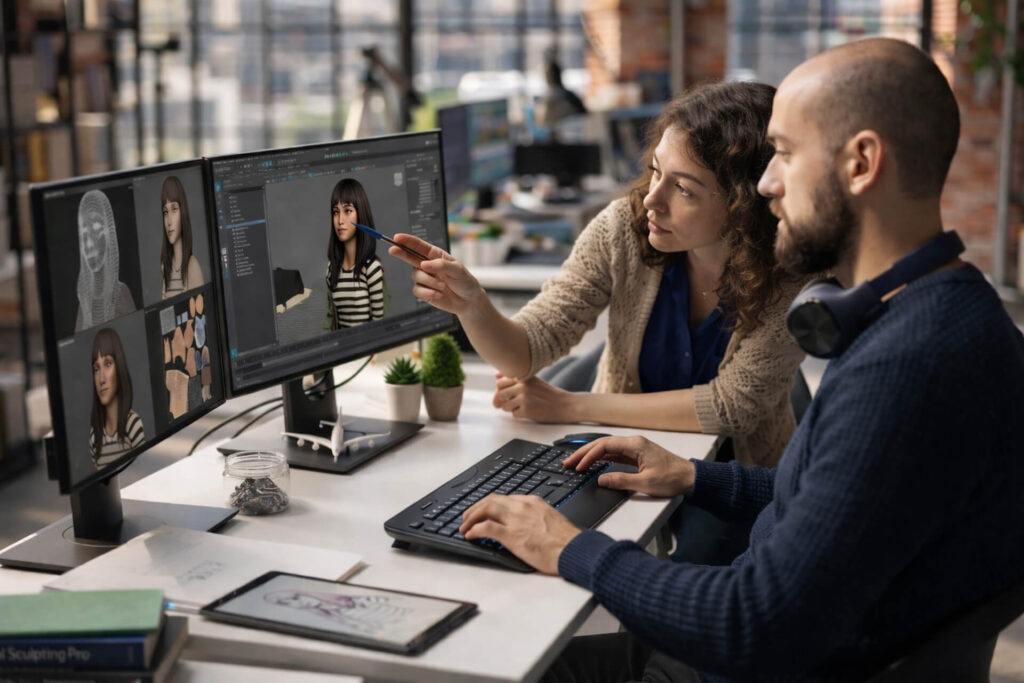
Synthetic performers and digital replicas create consent and disclosure obligations with real enforcement deadlines
Generative technology now allows producers to recreate a person’s voice, likeness, or performance with remarkable realism. Synthetic performers can appear in advertising campaigns, film scenes, or promotional materials without traditional casting or recording sessions.
Several state laws addressing digital replicas and synthetic performers are beginning to take effect. These laws focus on protecting individuals from unauthorized commercial exploitation of their identity. They typically require consent before creating or distributing digital replicas and may impose disclosure obligations when synthetic performers appear in commercial content.
Contracts with actors, voice performers, and influencers increasingly address digital replication rights directly. Agreements may define whether a performer’s voice or likeness can be digitally altered, how long those rights last, and whether they extend to future projects or promotional uses.
Disclosure rules also affect advertising and marketing workflows. When synthetic performers appear in promotional materials regulators may require clear identification that the content includes artificially generated elements.
Union and guild AI provisions are becoming baseline deal terms that reshape production planning
Labor agreements across the entertainment industry are evolving rapidly in response to artificial intelligence. Writers, performers, and other creative professionals have expressed concern that generative technologies could replicate their work without compensation or consent.
Recent negotiations between unions and studios have produced agreements that address how AI can be used during production. These provisions are quickly becoming standard expectations across the industry.
The agreements generally focus on performer consent, compensation for digital reuse, and protections that preserve human creative control over final works.
For producers these provisions affect practical planning decisions including budgeting, scheduling, and post production workflows.

Advertising, influencer media, and artificial intelligence are converging into a single enforcement risk
The boundaries between entertainment programming, social media content, and advertising continue to blur. Influencers promote products inside narrative videos. Brands produce scripted content that looks indistinguishable from entertainment. Artificial intelligence tools generate visuals or voices that appear authentic to viewers.
Regulators increasingly focus on disclosure and transparency when sponsored relationships or AI generated elements are involved.
Influencer marketing rules require creators to disclose material relationships with brands. These requirements apply regardless of whether the promotion appears inside traditional advertising or entertainment style storytelling.
Artificial intelligence adds another layer of complexity because synthetic visuals or voiceovers can create the impression of endorsements that never occurred.
Vertical dramas are turning entertainment storytelling into advertising infrastructure
Short form storytelling formats known as vertical dramas are rapidly gaining traction across mobile platforms. These productions combine serialized storytelling with aggressive distribution across social media and app ecosystems.
The format is evolving from pure entertainment into a hybrid of content product and marketing channel. Brands are beginning to use micro drama series to drive product awareness and customer acquisition.
This creates a unique legal challenge because the same content asset can function as scripted entertainment, branded content, and advertising.
Disclosure obligations, music licensing rules, endorsement requirements, and platform policies may all apply depending on how the content is distributed.
Companies experimenting with this format should treat vertical dramas as hybrid commercial assets that require coordinated review across production, advertising compliance, and platform distribution teams.

Emerging media formats are reshaping how intellectual property rights are licensed and monetized
Interactive experiences, platform native content ecosystems, and creator driven media formats are reshaping the way entertainment rights are licensed.
Platforms like Roblox and YouTube are building infrastructure that allows intellectual property owners to license content to creators while maintaining revenue sharing and enforcement mechanisms.
These systems illustrate a fundamental shift in how media rights operate. Licensing is no longer limited to traditional film, television, or streaming agreements. Instead platforms increasingly manage licensing relationships inside digital ecosystems where creators, brands, and audiences interact directly.
This development requires a new approach to rights mapping. Agreements must account for interactive storytelling, creator remixes, virtual goods monetization, and platform revenue sharing models.
Entertainment businesses that adapt their licensing frameworks to these emerging formats will be better positioned to protect and monetize their intellectual property in a rapidly evolving media landscape.
Frequently Asked Questions About Entertainment and Media Law in 2026

Beth is highly skilled in managing intellectual property portfolios—copyrights, trademarks, patents, and licensing—for clients ranging from emerging artists and producers to a top-100 accounting firm and a billion-dollar software company. From 2018 to 2023, she served as the elected representative for Georgia’s House District 95, championing the creative arts and earning the 2019 “Friend of Film Award.”
Beyond her practice, Beth remains deeply committed to community engagement—mentoring through Arté GA, serving on the Decide DeKalb Entertainment Advisory Board, and participating in Women in Film and Television Atlanta and the Georgia Production Partnership. A passionate musician and outdoors enthusiast, she plays piano, gardens, hikes North Georgia’s trails, and SCUBA dives worldwide.
- Life Rights in Film and Television When Permission Is Not the Whole Question - September 2, 2026
- Private Placement Memorandum - July 31, 2026
- AI licensing solved one problem and exposed another - June 22, 2026