AI licensing solved one problem and exposed another

AI licensing disputes are shifting from copyright ownership to contributor rights
For much of the past two years, the legal debate surrounding artificial intelligence has been framed around a relatively straightforward question: can AI companies use copyrighted works without permission? That question drove some of the most closely watched disputes in the technology and entertainment sectors. Record labels sued music-generation platforms. Publishers challenged the use of books and articles in training datasets. Artists questioned whether their work had been absorbed into image-generation systems without authorization.
As those cases progressed, many observers arrived at the same conclusion. If AI developers secured licenses from copyright owners, the industry would eventually move from litigation toward commercial cooperation. Licensing appeared to offer a practical path forward. Rights holders would receive compensation, AI companies would gain access to authorized content, and the legal uncertainty surrounding training data would gradually diminish.
Recent developments suggest the situation is considerably more complicated.
The lawsuit filed by the American Federation of Musicians against Universal Music Group and Warner Music Group demonstrates why. According to the complaint, the labels entered into AI-related licensing arrangements connected to settlements involving music-generation platforms Suno and Udio. The union alleges that recordings containing performances by union musicians were licensed for AI purposes without satisfying contractual obligations owed to those musicians, including compensation and disclosure requirements.
What makes the dispute important is not simply the parties involved. Rather, it reflects a shift in the legal questions being asked. The issue is no longer limited to whether AI companies obtained permission from copyright owners. Increasingly, the issue is whether everyone whose work contributed to the underlying content was included in the transaction. That distinction may define the next phase of AI-related disputes across music, entertainment, publishing, gaming, and digital media.
The AFM lawsuit asks a different question than the first wave of AI cases
The first generation of AI litigation focused almost entirely on ownership. When major record companies sued Suno and Udio in 2024, the central allegation was straightforward. The platforms were accused of copying copyrighted recordings to train generative music systems without authorization. The legal arguments centered on copyright infringement, fair use, and whether training on protected works constituted unlawful copying.
By late 2025, however, the landscape began to change. Universal Music Group and Warner Music Group announced settlements and licensing frameworks involving AI music platforms. Public statements emphasized authorized content, artist protection, compensation, and licensed AI development. The narrative suggested that the market was moving beyond confrontation and toward collaboration.
The AFM complaint challenges that assumption. The union is not primarily arguing that labels lacked ownership interests in the recordings they licensed. Instead, it argues that licensing those recordings for AI-related uses may have triggered separate obligations owed to the musicians whose performances appear on those recordings. In other words, the dispute does not focus on ownership of the asset. It focuses on obligations attached to the asset.
That distinction matters because it changes the legal analysis. A copyright dispute asks whether someone had permission to use a protected work. The AFM dispute asks whether permission from a copyright owner is sufficient when contributor rights remain unresolved. Those are not the same question, and the difference carries significant implications for creators, businesses, and investors operating in the AI economy.
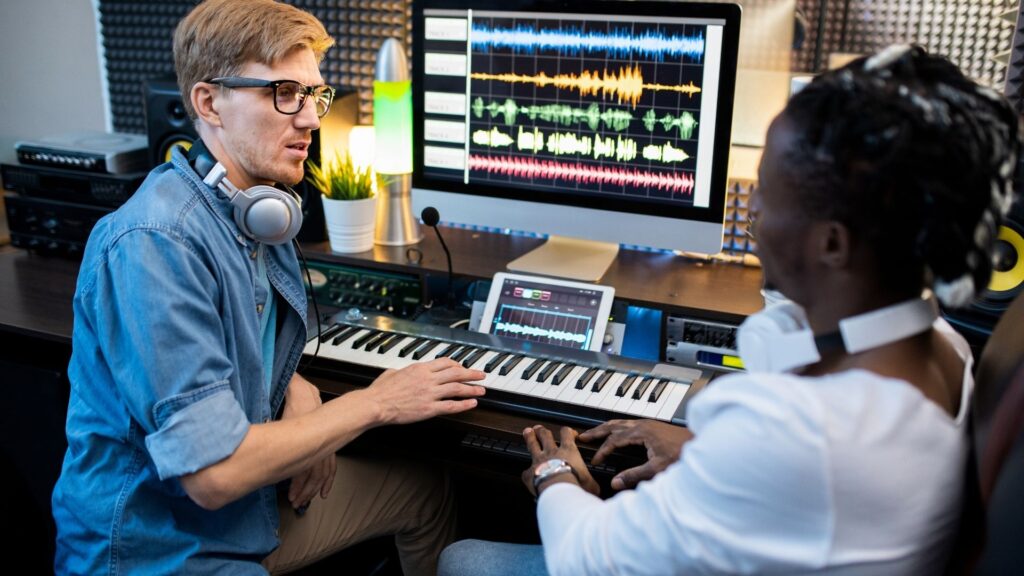
Permission from a copyright owner is not permission from every contributor
One of the most persistent misconceptions surrounding AI licensing is the belief that ownership and control exist in a single place. In practice, creative works rarely function that way.
A sound recording may involve copyright ownership, performer agreements, royalty arrangements, collective bargaining obligations, and contractual provisions governing reuse. A film library may involve actors, writers, directors, producers, studios, and guild agreements. A voice dataset may raise copyright issues, but it may also implicate publicity rights, consent requirements, and digital replica protections.
Consequently, a license obtained from one party may address only one layer of the overall rights structure.
The AFM lawsuit highlights precisely this issue. The dispute is not simply about whether labels could enter licensing agreements with AI companies. It is about whether those agreements accounted for obligations owed to contributors whose performances formed part of the licensed assets. The complaint effectively argues that resolving a copyright issue does not automatically resolve a labor or compensation issue.
For founders and AI companies, this creates a practical challenge. Due diligence can no longer stop at identifying who owns a copyright. It must also examine what obligations travel with that copyright and whether additional rights holders remain part of the equation.
As AI licensing disputes continue to evolve, chain-of-title analysis is becoming less about ownership alone and more about understanding the full network of contractual, labor, and identity rights attached to creative works.
Voice actors, musicians, and performers are raising the same concern
The AFM lawsuit is not an isolated development. Similar themes are emerging across multiple creative industries, often through different legal frameworks.
In Lehrman v. Lovo, voice actors alleged that recordings provided for limited purposes were ultimately used to create synthetic voices commercialized through an AI platform. Although the case involved a different set of claims, including contract and publicity-rights theories, the underlying concern closely resembles the issue raised by the musicians’ union. Contributors questioned whether participation in one context had been transformed into something materially different without meaningful consent.
A comparable dispute emerged when SAG-AFTRA challenged the use of an AI-generated Darth Vader voice in Fortnite. Rather than focusing exclusively on intellectual property ownership, the union’s position centered on bargaining rights and the impact of AI on covered human work. Once again, the dispute highlighted a gap between authorization at one level and consent at another.
Viewed together, these disputes reveal a broader pattern. Musicians, voice actors, performers, and creative professionals are increasingly focused on the same concerns. They want to know who approved the use, who received compensation, who retained control, who was informed, and who was excluded from the process.
The first wave of AI litigation focused on whether technology companies had permission from copyright owners. The second wave increasingly asks whether copyright owners had permission from everyone else.
“Licensed AI” may be legally accurate and still commercially incomplete
As licensing becomes a larger part of the AI economy, marketing language deserves closer scrutiny.
Many companies describe products as licensed, authorized, commercially safe, or creator friendly. While those descriptions may be accurate in certain respects, they often obscure a more complicated reality.
Licensed by whom? Authorized for which rights? Safe for which stakeholders?
The AFM lawsuit illustrates why these distinctions matter. A company may secure rights from a copyright owner while remaining exposed to claims involving contributors, performers, labor agreements, or contractual obligations. In that scenario, describing a system as licensed may be legally correct while still failing to capture the full scope of potential exposure.
The issue becomes even more significant as AI products move into voice cloning, avatar generation, digital replicas, and synthetic media. In those environments, copyright rights represent only one component of a broader legal framework.
Businesses should therefore be capable of explaining exactly which rights have been secured, which stakeholders have been included, and which limitations continue to apply. The alternative is creating expectations that become difficult to defend when disputes emerge.
AI licensing disputes are expanding beyond copyright
Copyright remains central to AI regulation, but it is no longer the only source of legal risk. Digital replica laws, publicity rights, labor agreements, collective bargaining obligations, and emerging legislation are becoming equally important.
The proposed NO FAKES Act provides a useful example. Rather than focusing on ownership of creative works, the legislation addresses unauthorized digital replicas of voice and likeness. Its purpose is to protect aspects of personal identity that may be reproduced through AI systems.
This development matters because many AI products now operate at the intersection of content rights and identity rights. A company may possess authorization to use certain content while simultaneously facing questions about whether it has authority to reproduce a person’s voice, image, or recognizable characteristics.
As a result, AI licensing disputes are increasingly extending beyond traditional copyright frameworks. They are becoming disputes about participation, consent, disclosure, compensation, and control.
The next disputes will focus on participation, not ownership
The most important lesson from the AFM lawsuit is not that AI licensing creates risk. Every significant technological shift creates risk. The more important lesson is that the source of that risk is changing.
The first generation of AI disputes focused on whether companies used copyrighted works without permission. The next generation is increasingly focused on whether everyone whose work contributed to those assets was included in the decision to license them.
For creators, that distinction expands the conversation beyond ownership. For businesses, it means that licensing agreements alone may not provide the certainty they once appeared to offer.
We increasingly advise founders, creators, and media companies that AI licensing should be viewed as one component of a broader rights strategy. Copyright ownership remains important, but it rarely represents the entire picture. Contributor agreements, publicity rights, labor obligations, digital replica protections, and disclosure requirements deserve equal attention.
The AFM dispute, the Lovo litigation, and the Fortnite challenge point toward the same conclusion. The next major AI licensing disputes are likely to focus less on whether permission existed somewhere in the rights chain and more on whether everyone affected by the transaction had a place within it.

Beth is highly skilled in managing intellectual property portfolios—copyrights, trademarks, patents, and licensing—for clients ranging from emerging artists and producers to a top-100 accounting firm and a billion-dollar software company. From 2018 to 2023, she served as the elected representative for Georgia’s House District 95, championing the creative arts and earning the 2019 “Friend of Film Award.”
Beyond her practice, Beth remains deeply committed to community engagement—mentoring through Arté GA, serving on the Decide DeKalb Entertainment Advisory Board, and participating in Women in Film and Television Atlanta and the Georgia Production Partnership. A passionate musician and outdoors enthusiast, she plays piano, gardens, hikes North Georgia’s trails, and SCUBA dives worldwide.
- Entertainment Contracts That Follow You to Your Next Show - October 8, 2026
- Film Encryption and Watermarking for Unauthorized Release Protection - September 29, 2026
- Music Licensing in the U.S.: A Legal Guide for Musicians - September 10, 2026